


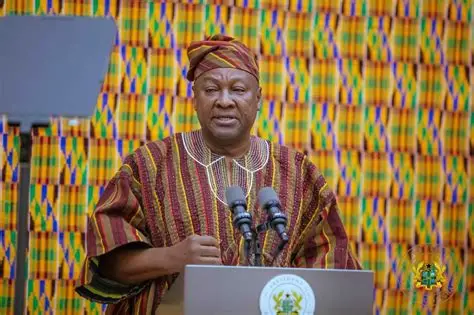
By John Dramani Mahama
Here is a section-by-section breakdown and analytical review of President John Dramani Mahama’s State of the Nation Address (SONA), with deeper insight into policy direction, economic implications, and public expectations.
President Mahama’s State of the Nation Address (SONA) to Parliament in Accra was both a performance report and a strategic roadmap. Delivered at a time of economic recalibration, the speech attempted to balance realism about past challenges with optimism about Ghana’s recovery trajectory.
Below is a structured breakdown of the major themes and what they mean for Ghana.
1️⃣ Economic Recovery & Macroeconomic Stability
Key Highlights from the Address:
- Reduction in public debt burden
- Improved GDP growth projections
- Narrowing fiscal deficit
- Declining inflationary pressures
- Stabilization of the Ghana cedi
Analysis
The President framed the economy as transitioning from crisis management to structured recovery. Emphasis was placed on fiscal consolidation, revenue optimization, and expenditure discipline.
What this means:
- Improved investor confidence if consistency is maintained
- Better borrowing terms internationally
- Potential easing of interest rates for businesses
However, sustainability will depend on:
- Maintaining revenue growth
- Avoiding election-cycle overspending
- Managing external shocks (commodity prices, global inflation)
2️⃣ Debt Restructuring & Fiscal Discipline
One of the most critical aspects of the speech centered on Ghana’s debt restructuring process and fiscal prudence.
Policy Direction:
- Commitment to responsible borrowing
- Domestic revenue mobilization reforms
- Improved tax administration
Analysis
Ghana’s previous debt crisis significantly damaged financial credibility. The administration’s messaging focused on restoring confidence.
If properly implemented:
- Ghana could regain stronger international credit ratings
- Private sector liquidity could improve
But fiscal discipline must remain long-term—not temporary.
3️⃣ Energy Sector Reform
The President addressed structural inefficiencies in the energy sector, including operational and financial challenges.
Focus Areas:
- Reducing energy sector debt
- Improving efficiency in state utilities
- Ensuring stable power supply
Why This Matters
Energy reliability is central to industrialization and SME growth. Without consistent power supply, economic expansion becomes difficult.
Stability in this sector directly impacts:
- Manufacturing
- Digital economy growth
- Foreign direct investment
4️⃣ Job Creation & Private Sector Development
The speech highlighted private sector–led growth as the engine of employment.
Strategic Areas:
- Support for SMEs
- Agribusiness expansion
- Youth employment initiatives
- Skills development programs
Analytical Insight
While policy frameworks exist, the key question remains:
Will access to capital and reduced interest rates follow policy promises?
Sustainable job creation requires:
- Affordable financing
- Policy consistency
- Reduction in bureaucratic bottlenecks
5️⃣ Agriculture & Food Security
Agriculture was presented as a growth pillar.
Emphasis:
- Boosting local food production
- Reducing import dependency
- Supporting farmers with inputs
Broader Implication
If executed properly, this can:
- Reduce inflation
- Strengthen the cedi
- Improve rural income levels
But climate variability and input costs remain risks.
6️⃣ Social Intervention & Public Services
The President referenced improvements in:
- Healthcare funding
- Education support systems
- Social protection programs
These measures aim to cushion vulnerable populations during economic restructuring.
7️⃣ Governance, Transparency & National Unity
Beyond economics, the speech emphasized:
- Accountability
- Anti-corruption efforts
- National cohesion
Political stability plays a major role in sustaining economic reforms.
📊 Overall Economic vs Public Sentiment
Economic Indicators (Government Narrative):
- Recovery underway
- Debt declining
- Growth improving
Public Sentiment:
- Cost of living remains high
- Youth unemployment concerns persist
- Immediate relief is slower than macro improvements
There remains a gap between macroeconomic stabilization and household-level relief. Bridging this gap will determine the administration’s political and economic success.
Strengths of the Address
✔ Clear economic direction
✔ Focus on fiscal discipline
✔ Strong messaging on unity
✔ Emphasis on private sector growth
Areas That Require Monitoring
- Speed of inflation reduction
- Interest rate adjustments
- Implementation transparency
- Measurable job creation numbers
Conclusion: A Recovery Speech with Conditional Optimism
President John Dramani Mahama’s State of the Nation Address projects Ghana as a nation on the path to recovery. The structural reforms outlined are significant and, if sustained, could reposition the economy for long-term stability.
However, the true measure of success will be whether:
- Households feel relief
- Businesses access affordable capital
- Youth employment improves
- Inflation continues to decline
The speech sets direction. Execution will define legacy.